The challenge

This project presented a unique UX and visual design challenge: how to present complex, multi-layered data in a way that feels trustworthy, clear, and easy to navigate, especially for users whose primary focus is interpreting data, not learning how to use a tool.

The portal needed to:

  • Communicate large, data-heavy dashboards clearly
  • Support users in understanding and interpreting disease metrics
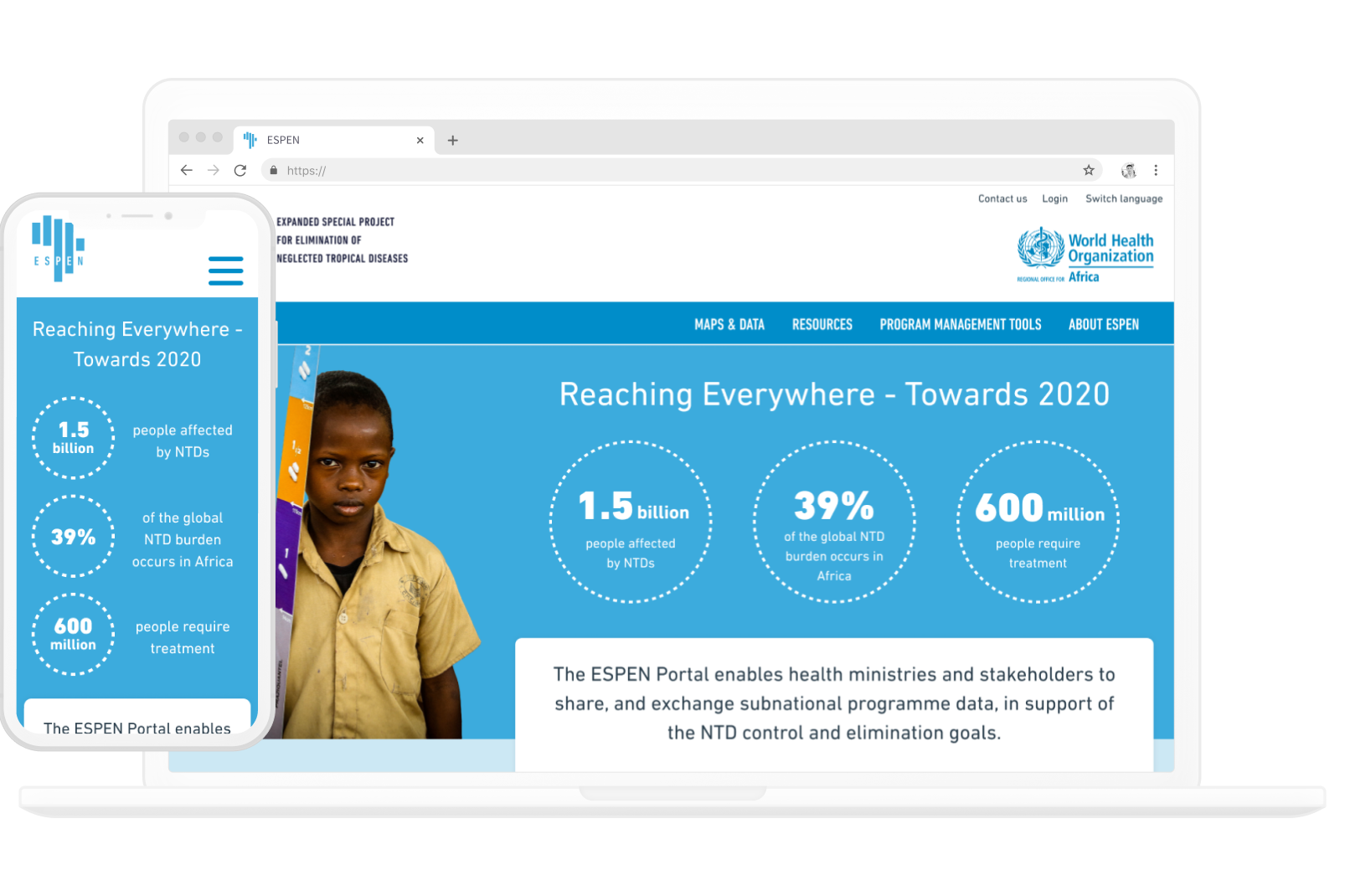
  • Promote trust and authority through professional presentation
  • Balance clarity with engaging visual design so the interface feels approachable, not overwhelming

UI design

Clarity through structure

To make dense data digestible, I introduced:

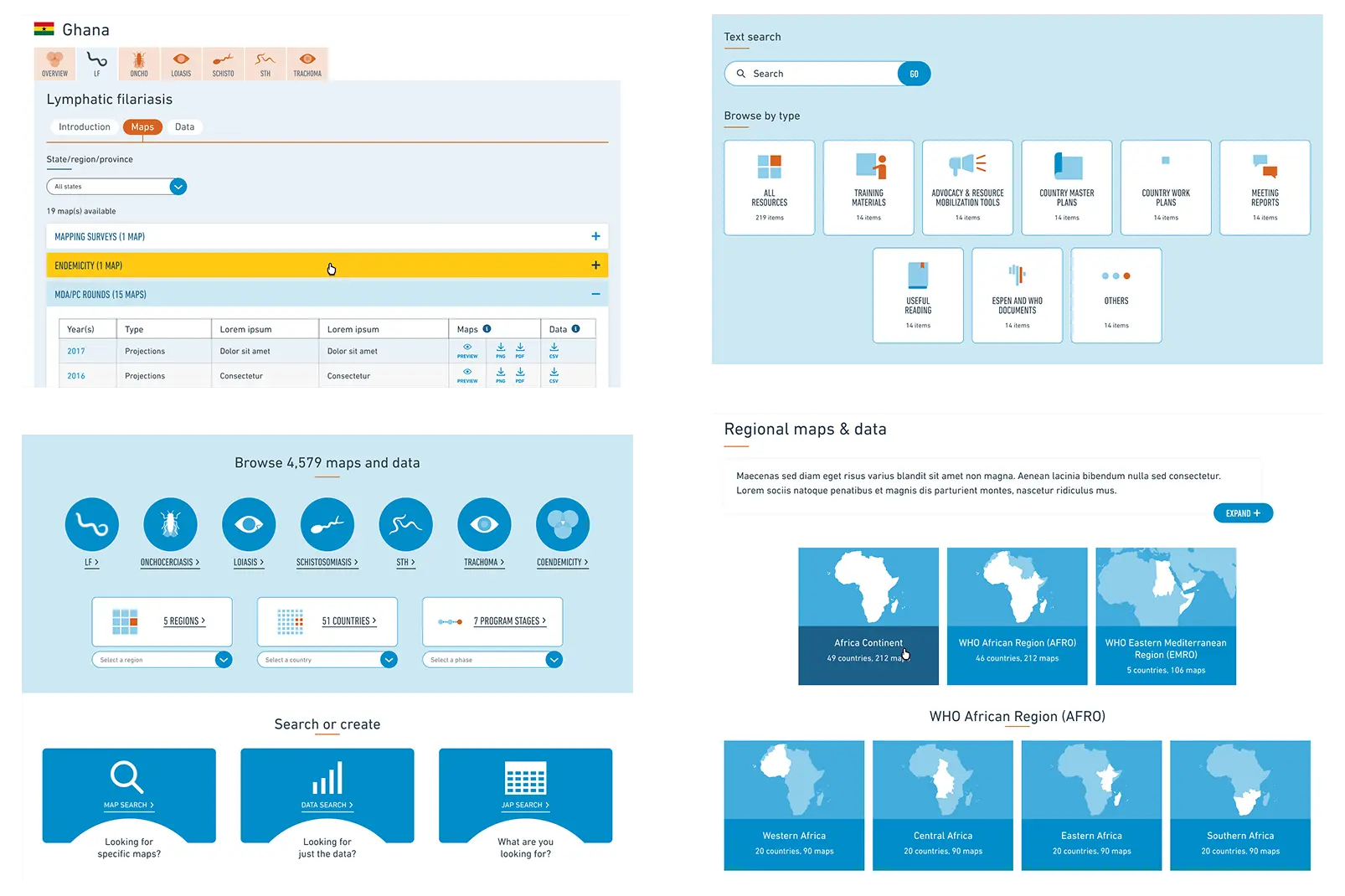
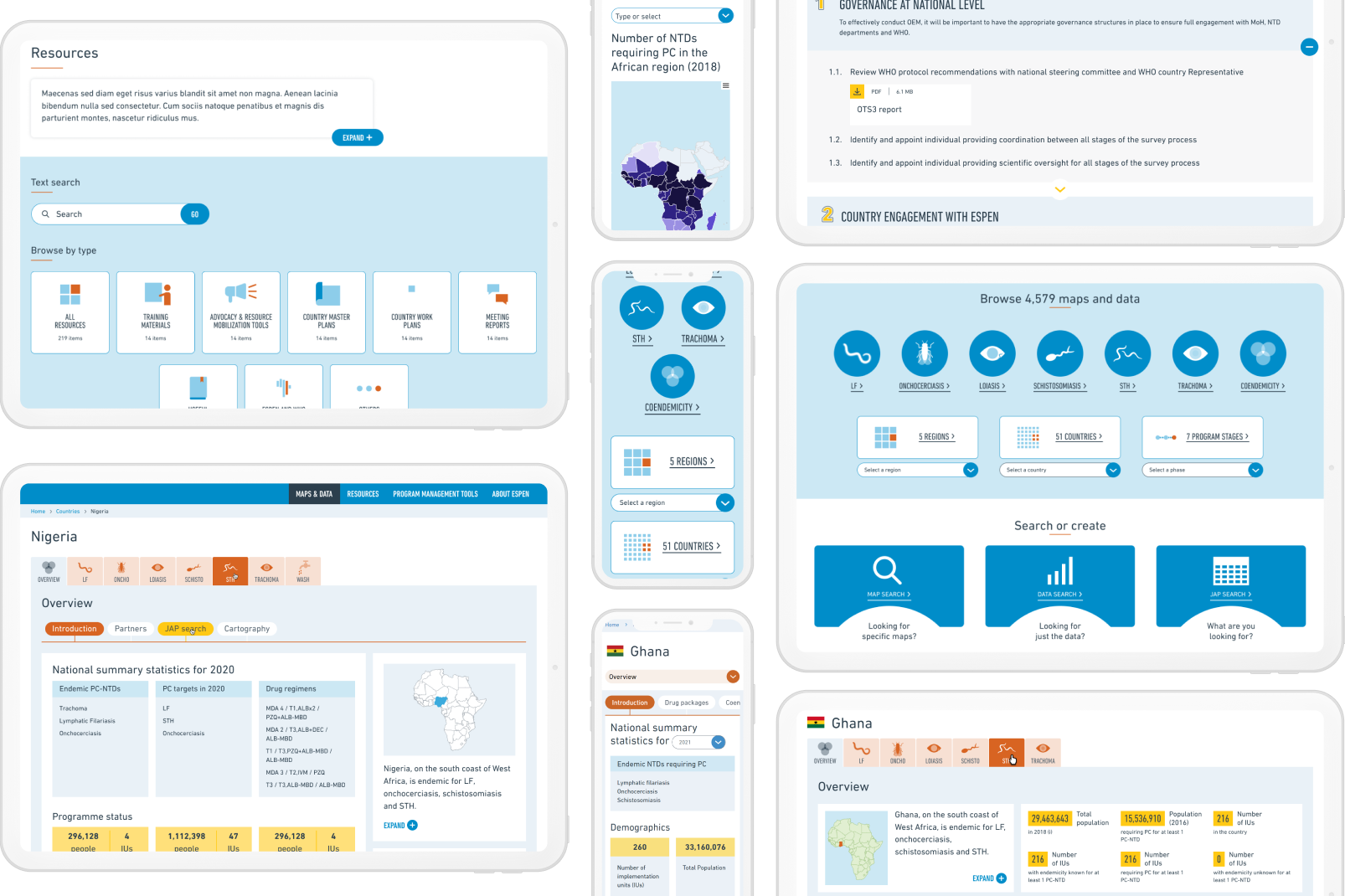
  • Clear separation of information blocks
  • Generous spacing and hierarchy between headers, charts, and filters
  • Reduced reliance on heavy text, instead using meaningful visuals and icons

These choices guide users gently through their workflow - from overview statistics to detailed map and chart analysis - without cognitive load.

Professional but engaging visuals

The portal’s visual tone had to reflect its use by public health professionals. To achieve this:

  • Icons were designed to visually represent core categories and actions
  • Minimal copy was used to reduce distraction and keep users focused on data
  • Colour and typography were chosen to feel authoritative, not decorative

Outcome

The redesigned ESPEN interface now:

  • Communicates complex epidemiological data clearly and accessibly
  • Reflects WHO’s professional standards and tone
  • Provides a flexible design language that grows with the platform

The portal’s design lets the data take centre stage, giving users the visual structure they need to interpret and act on information with confidence.

Colour palettes & data visualisation

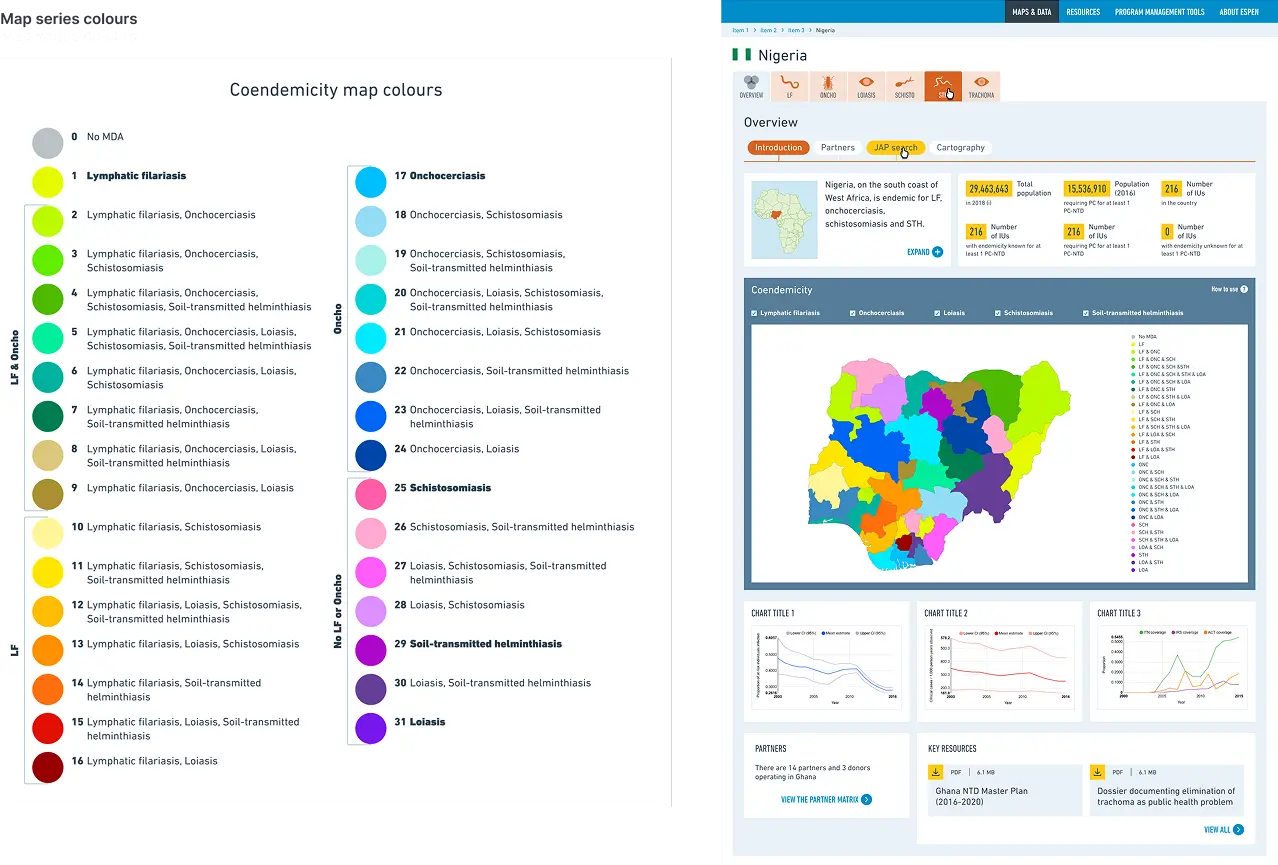
One of the most technically challenging aspects was developing multiple colour systems for map and chart use:

  • Some views required up to 25 distinct colours in a single display
  • Palettes needed to work with high contrast for clarity
  • Accessibility considerations, including colour-blind friendliness, were prioritised

Rather than choosing palettes purely for aesthetics, I emphasised functional clarity, ensuring that each hue remained distinguishable on busy visuals and accurately reflected underlying data.

This work reinforced the idea that highly functional design sometimes means prioritising clarity over visual “flash.”